Thank you, SDCC, for the opportunity to provide submissions on the ‘Living With Trees’ policy. At first glance, it is great to see SDCC appear to embrace the importance and value of trees within our ‘urban forests’ and their potential as part of Green Infrastructure. However, considering we are now firmly in the midst of a Climate Emergency and a Biodiversity Emergency, there is little evidence this policy is offering adequate real-life protection of our trees, and certainly lacks the ambition that is essential to expand our tree canopy to fight the Climate / Biodiversity Emergencies.
Many reasons are given in the policy, as to why trees cannot be felled, which reads positively, but where detail is given, the holes in this protection become obvious. In fact the criteria to fell a tree include trees that are deemed to be dying, or ‘declined beyond recovery’, to allow space for more desirable trees or newly planted trees and to allow for construction work where the tree is in the way. Utility companies are also free to clear what they deem necessary. SDCC do not employ a dedicated Arborist or Tree Consultant, so the criteria for ‘dying’ / ‘in decline’ seem open to an interpretation that might change depending on desire to remove the tree.
In practise, trees are offered little to no protection during construction projects. Firstly the planning requirements rarely require tree protection (apart from limited TPOs), but even trees not located in the development footprint are regularly sacrificed as they are in the way of the equipment accessing the site. And once it is suggested that a tree’s integrity is at risk of undermining from construction work, it can be removed too, for fear it might survive and possibly be unstable. Even where trees are of huge importance and subject to Environmental Impact Assessment, it is still considered acceptable to remove them to facilitate construction equipment, such as is happening with the new bridges and paths along the Dodder Greenway, where trees were cleared right down to the water’s edge in some areas. This approach, though economical from a construction perspective, needs to change if we are to show any sincerity in our protection of trees – particularly ancient woodland and riparian hedgerows where the diverse biodiversity they supported cannot be replaced by poorly maintained saplings planted in their place.
Another example of trees losing out to construction is the Ballycullen SHD with specific regard to the riparian hedgerows. Whilst there are many admirable actions from a biodiversity point of view to be found, the system used to evaluate trees prior to construction is based on their health / maturity and size. Smaller trees like Holly or hawthorn, appearing in broken hedgerows are deemed of low value. Almost a quarter of the trees were deemed to have little or no life expectancy and only 32% were deemed to be in ‘good or approaching good’ condition. In reality, this shows the lack of appreciation from the contribution to biodiversity provided by trees which provide habitats and store carbon throughout their entire lifecycle. Indeed, the condition of these trees is only relevant due to the proximity of proposed housing to them. Were the construction further away from the riverbank, these trees would live out their lifecycles without requiring felling. Trees can take decades (sometimes centuries) to die and decompose and in the process, they provide essential biodiversity critical to the regeneration of other trees in the surrounding woodland. Instead of building as close as is possible to such streamside hedgerows, we should be providing belts of lands where natural tree regeneration is allowed to ensure the ongoing protection of these trees for generations to come. These should be zoned / protected for biodiversity only. These belts would also protect the trees from vandalism, burning and interference that comes from the close proximity of high density human populations, such as happens to this same riparian hedgerow where it travels along the boundary of Woodstown Village. Thankfully any damage here has so far been limited but the potential for damage particularly from fires is a real threat. Despite being marked ‘protected’ in the Local Area Development Plan, these trees have not even been surveyed as yet. However, Woodstown have had positive discussions with the Heritage Section of SDCC about the potential of these trees for Green Infrastructure routes in the future so hopefully protections will be possible in the future, but there is little evidence of such plans for protection in the policy?
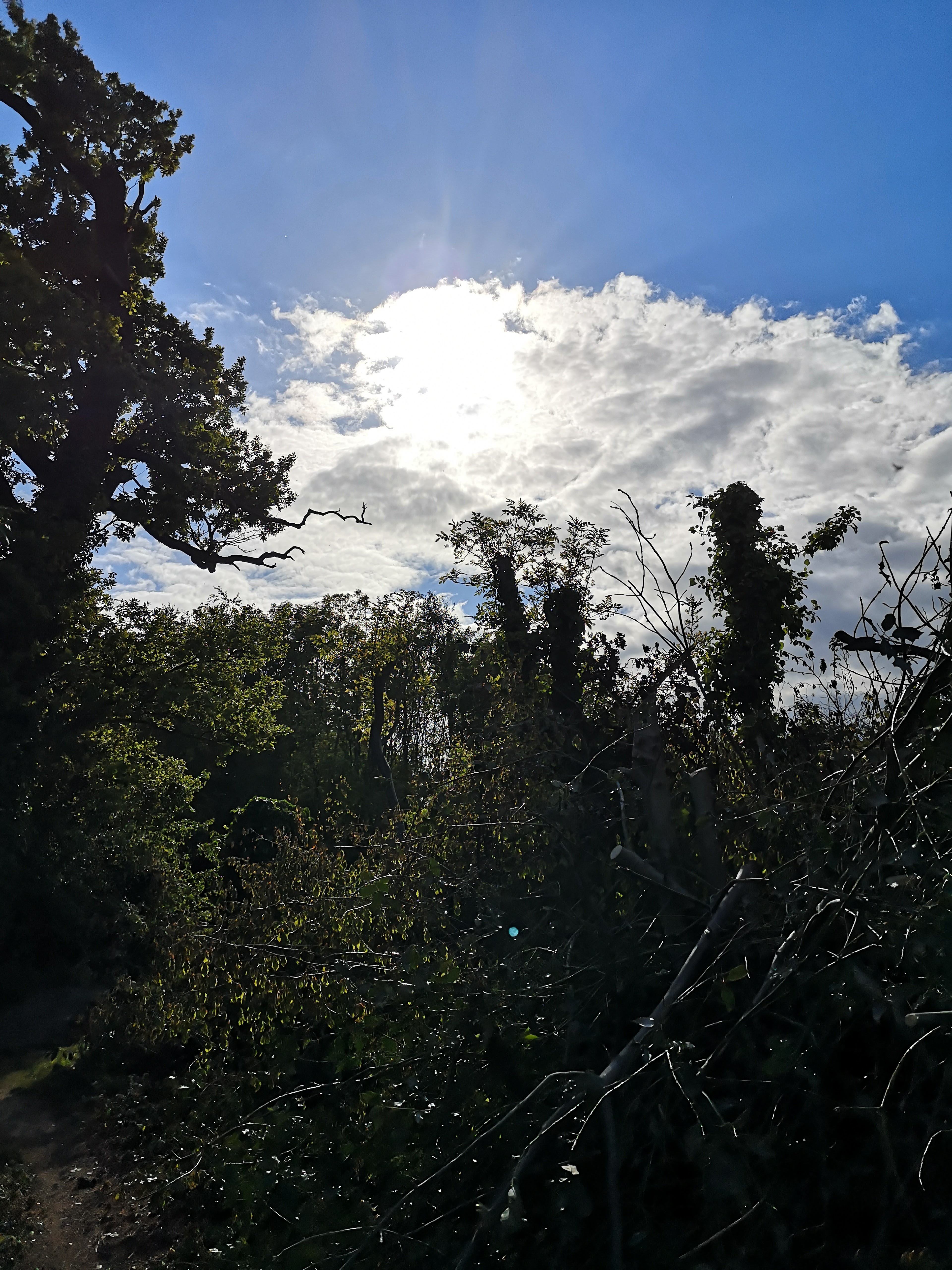
Unfortunately, the freedom with which utility companies are afforded with respect to tree cutting has been as detrimental as vandalism along this Woodstown hedgerow which is unfortunate to have a high voltage power lines running above it. About two years ago, in the height of nesting season, the hedgerow trees under these lines were hacked down, with the remnants dumped on top of other vegetation. The need was clear – these trees could interfere with the power lines, but the manner and timing in which the work was done (and left) showed no protection for surrounding trees not to mention the habitats and nests they supported.
Despite the many amazing waterways and woodlands occurring within SDCC, we have only four Tree Preservation Orders! As a minimum, trees within SACs (such as Glensmole / Bohernabreena) should have a considerable number of TPOs as should trees along the Dodder and tributaries which flow into the SAC of Dublin Bay. Bearing in mind that TPOs do not preclude the removal of trees, and just add additional protection through planning permission, there really is no excuse for not including such trees in the TPOs and would align with the SDCC objective of protecting hedgerows.
Tree Planting
Teideal:
Work with nature to plant trees, don't fight it!
While it is great to see an objective by SDCC to replace felled trees, there is no target figure provided and no net figure provided for increase in overall net tree numbers. Considering the policy provides many reasons why trees can be felled, there should be converse obligations ensuring an increased number of trees are planted, rather than offering potential excuses not to re-plant such as budget constraints. Any reductions in overall net tree numbers year on year is surely unacceptable in a climate crisis?
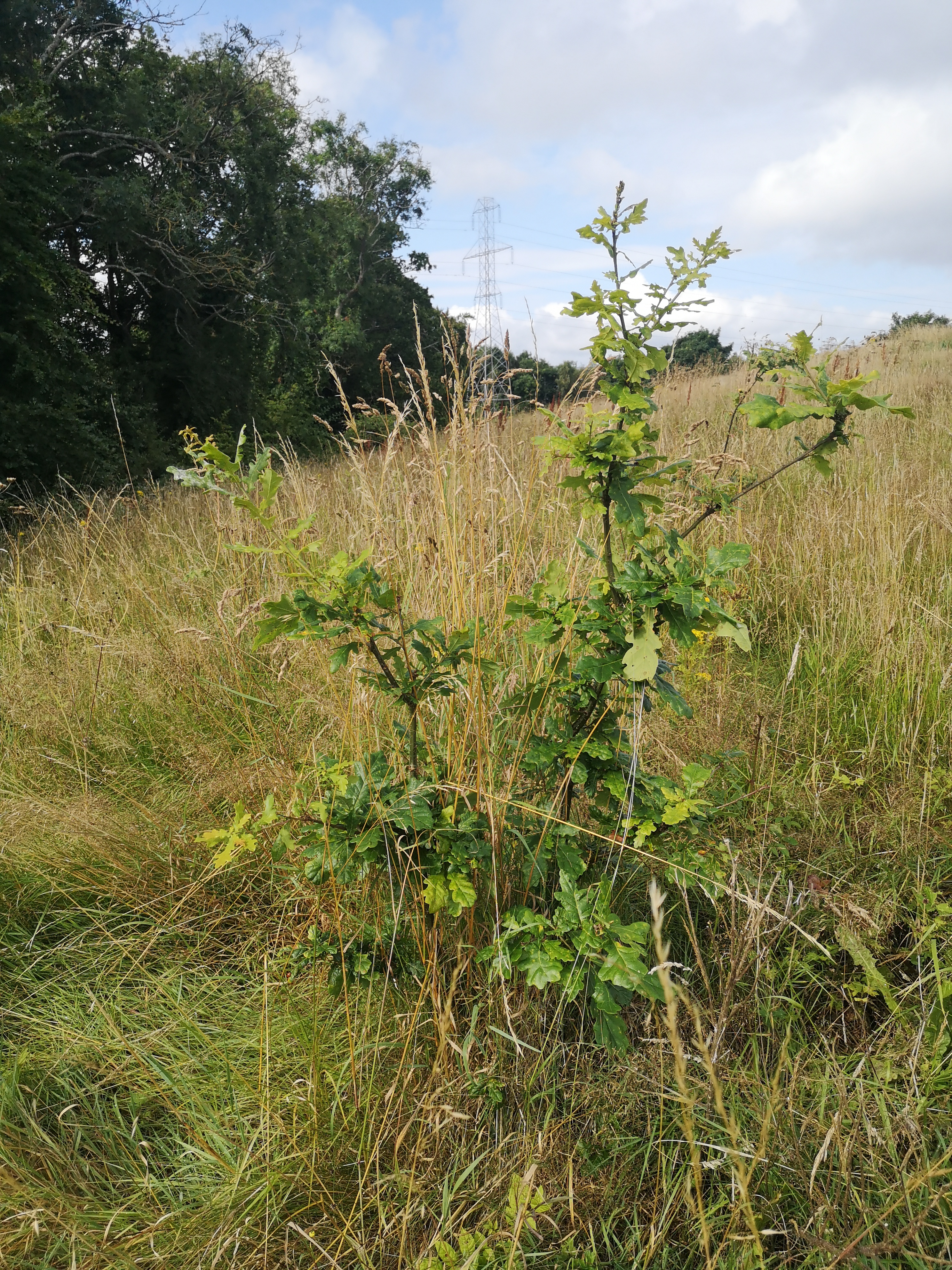
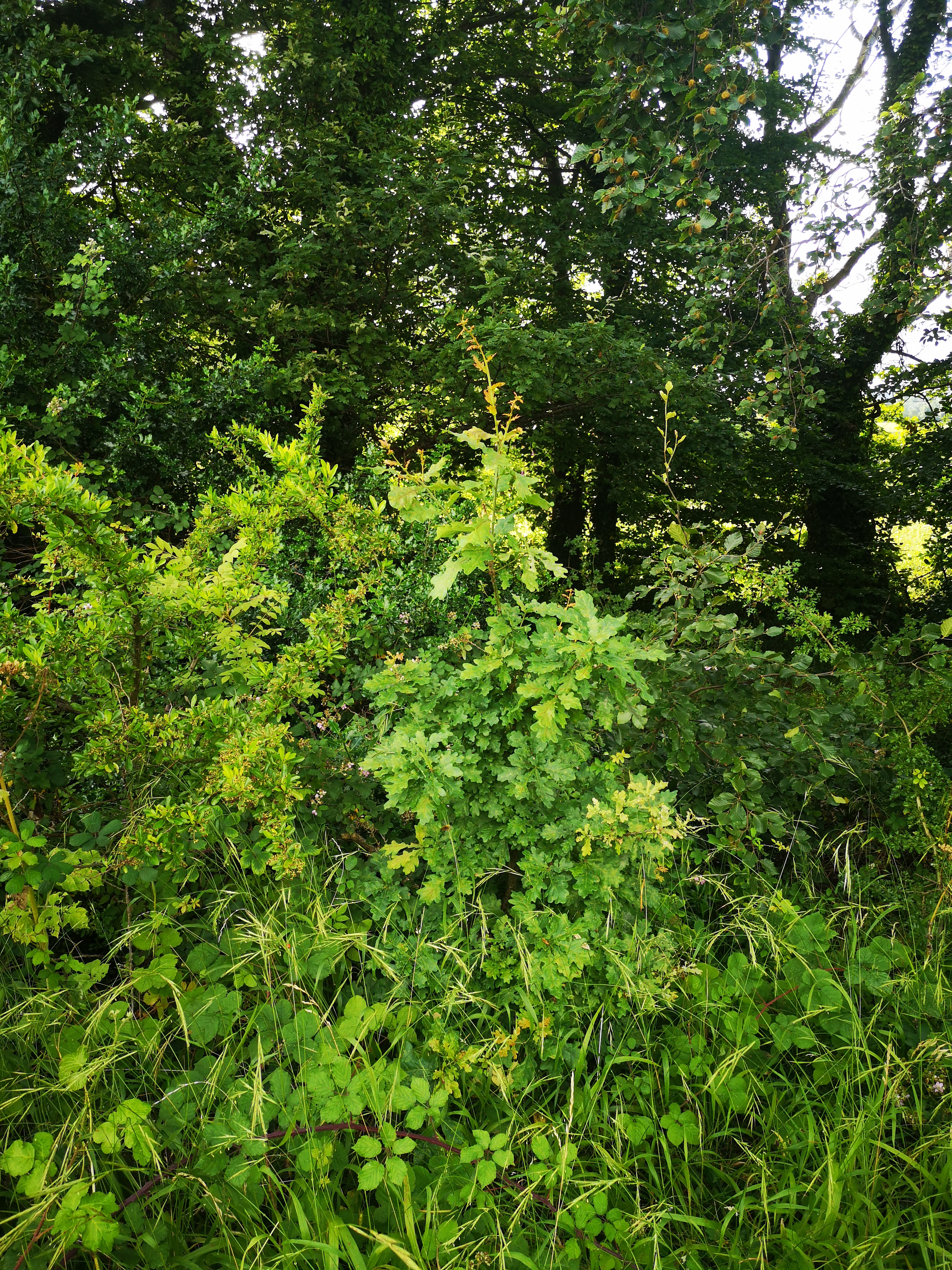
There are many easy ways of increasing tree numbers with little cost or intervention. Where large numbers of native trees exist, there is scope to let these woodlands regenerate naturally by protecting and zoning adjacent land for biodiversity (where such land is available). Natural regeneration is already occurring in the land beside the branch of Woodstown Stream that flows along the border of Woodstown Village. This double lined hedgerow, rich in mature beech, ash, oak, holly, hawthorn, alder and elm is self-seeding in the wildflower meadow in Knocklyon Park. Ashes and Oaks have reached heights of 4-5 foot (in this previously mowed area) and dot the slope adjacent to the hedgerows. There is a triangle of vacant land on the other side of the hedgerow, between White Pines, Stocking Well and Woodstown Village where self-seeding is also occurring. Another branch of Woodstown Stream borders a second side of this triangle of land, which is rich in wildlife habitat already. It is the perfect spot to allow the woodland to expand naturally and provide a wonderful haven for animals using the stream as a wildlife corridor. It would be great to see areas like this and similar areas where natural woodland has developed (such as the Four Districts Woodland Group) protected legally and encouraged. Why work against nature when it is doing its best to regenerate trees for free?
In the many huge bare green areas dotted across SDCC, huge scope exists to add trees and change these from effective deserts to biodiverse areas. We are lucky in Woodstown to have some lovely areas of large-scale planting within Knocklyon Park which as well as providing rich biodiversity and carbon sequencing, also make the park far more interesting, engaging and attractive to residents than vast expanses of lawn. This should be replicated in other green areas throughout SDCC, using native trees where possible. The Stepping Stones forests being promoted by Tallaght Community Council will see 2000+ trees planted in various fast growing forests providing a wealth of biodiversity. So many of our community greens, public parks, public buildings and beyond could benefit from these quick growing transformative woodland habitats. Similarly, there are other initiatives such as DCs for Bees Orchards and many other schemes and grants that assist councils with tree planting. Planting of orchards as a strategy would go a long way to not only meet the goals agreed by SDCC when they signed up the Pollinator Plan, but also to assist with sustainability goals, grow your own initiatives etc which SDCC have begun to promote.
Whilst replanting is essential, there is no pretending there is a like for like swap in value in replacing an old mature tree with a new sapling. As mentioned earlier, mature trees provide rich sources of biodiversity that can’t be sustained with a new sapling. This is why felling should be avoided, and the net number of trees in existence must always be increasing. It is of course acknowledged that SDCC have to deal with legacy issues of poor tree choices in the far past which leads to annoyed residents in the present, so where replanting does take place, it would be great if tree selection and location was considered so as to avoid irritation to residents in the future. Thankfully the technology and knowledge to do this is readily available now-a-days, though the employment of a dedicate Arborist and Tree Specialist would ensure the right choices are made in the future.
Action Plan
Teideal:
Logging and monitoring of trees.
This is mentioned as an ongoing activity in SDCC and an essential one to determine what trees should be added to TPOs etc. It would be great to see full transparency about the trees already logged and to see an emphasis on trees in sensitive areas such as old hedgerows and riparian trees. Involvement of local communities and schools during this process would promote knowledge, ownership and pride in the trees within an area, and could speed up the process.
Tree Maintenance
Teideal:
Routine maintenance should not take place during nesting season!
The policy states that SDCC can continue with tree pruning and felling throughout the year as public trees can be considered cultivated. This interpretation is completely at odds with any attempt to protect trees or cherish our protected birds as per the Wildlife Act. These trees are not Coillte forestry trees , or crop trees of any sort so the rational to consider them cultivated can only be to allow year round tree maintenance for purely financial reasons. Whilst it is disturbing enough that Coillte allow felling of trees during nesting season, it is perhaps more disturbing so see that SDCC are allowed do this as the trees in question are likely to support a far more biodiversity than Spruce and Larch. We are all familiar with hedgerows being cut under the guise of health and safety during the closed season where often no such risk existed, but branding Lime, London Planes, Ash etc as cultivated, as if we were harvesting fruit for sale from them, is disingenuous and surely sends a terrible message to residents with similar trees that they are not supposed to be cutting? Regardless, it is of little relief to the birds nesting in Council trees to know those trees are cultivated. Although the danger to nesting birds is mitigated somewhat by use of the bird nesting inspection reports, it is hard to see how such inspections, subjective in nature, relying on observations by eye and carried out by those set up to start work, are likely to protect many nests. It is extremely difficult to spot many nests at any rate and if one is spotted and deemed ‘old’ (ignoring that nests sometimes are empty briefly in between broods of chicks), work can continue. This is completely against the spirit of the Wildlife Act which is there because our birds are protected species, due to there hugely diminishing numbers. This approach to maintenance may be economical for the council, but the Biodiversity Crisis is real and here and we are have to change our priorities to protect the biodiversity we have left.
In summary:
It is to be welcomed that SDCC have a Tree Policy, it needs to be backed up by the hiring of a dedicated Tree Specialist / Arborist to ensure the correct policy is implemented. Climate Change and Biodiversity need to be prioritised as SDCC has more power (and responsibility) to impact real, positive change to our tree numbers than individual citizens on their own. Ambitious tree planting should take place, to improve our barren greens, with an emphasis on native species. Every opportunity to protect existing habitats must be considered in view of the worsening climate and biodiversity crisis in which we find ourselves, even if that means revisiting previous decisions and reconsidering them (e.g. the Hellfire Club) to ensure tree numbers are increasing and existing habitats are protected. More protection and the establishment of protected biodiversity zones must be provided to trees around our waterways, and wild areas where hawthorns, hazels and smaller trees exist should be valued rather than disregarded as ‘low-value’ shrubs. These are the source of our future forests if we can learn to work with nature rather than against it!

Observations
Thank you, SDCC, for the opportunity to provide submissions on the ‘Living With Trees’ policy. At first glance, it is great to see SDCC appear to embrace the importance and value of trees within our ‘urban forests’ and their potential as part of Green Infrastructure. However, considering we are now firmly in the midst of a Climate Emergency and a Biodiversity Emergency, there is little evidence this policy is offering adequate real-life protection of our trees, and certainly lacks the ambition that is essential to expand our tree canopy to fight the Climate / Biodiversity Emergencies.
Many reasons are given in the policy, as to why trees cannot be felled, which reads positively, but where detail is given, the holes in this protection become obvious. In fact the criteria to fell a tree include trees that are deemed to be dying, or ‘declined beyond recovery’, to allow space for more desirable trees or newly planted trees and to allow for construction work where the tree is in the way. Utility companies are also free to clear what they deem necessary. SDCC do not employ a dedicated Arborist or Tree Consultant, so the criteria for ‘dying’ / ‘in decline’ seem open to an interpretation that might change depending on desire to remove the tree.
In practise, trees are offered little to no protection during construction projects. Firstly the planning requirements rarely require tree protection (apart from limited TPOs), but even trees not located in the development footprint are regularly sacrificed as they are in the way of the equipment accessing the site. And once it is suggested that a tree’s integrity is at risk of undermining from construction work, it can be removed too, for fear it might survive and possibly be unstable. Even where trees are of huge importance and subject to Environmental Impact Assessment, it is still considered acceptable to remove them to facilitate construction equipment, such as is happening with the new bridges and paths along the Dodder Greenway, where trees were cleared right down to the water’s edge in some areas. This approach, though economical from a construction perspective, needs to change if we are to show any sincerity in our protection of trees – particularly ancient woodland and riparian hedgerows where the diverse biodiversity they supported cannot be replaced by poorly maintained saplings planted in their place.
Another example of trees losing out to construction is the Ballycullen SHD with specific regard to the riparian hedgerows. Whilst there are many admirable actions from a biodiversity point of view to be found, the system used to evaluate trees prior to construction is based on their health / maturity and size. Smaller trees like Holly or hawthorn, appearing in broken hedgerows are deemed of low value. Almost a quarter of the trees were deemed to have little or no life expectancy and only 32% were deemed to be in ‘good or approaching good’ condition. In reality, this shows the lack of appreciation from the contribution to biodiversity provided by trees which provide habitats and store carbon throughout their entire lifecycle. Indeed, the condition of these trees is only relevant due to the proximity of proposed housing to them. Were the construction further away from the riverbank, these trees would live out their lifecycles without requiring felling. Trees can take decades (sometimes centuries) to die and decompose and in the process, they provide essential biodiversity critical to the regeneration of other trees in the surrounding woodland. Instead of building as close as is possible to such streamside hedgerows, we should be providing belts of lands where natural tree regeneration is allowed to ensure the ongoing protection of these trees for generations to come. These should be zoned / protected for biodiversity only. These belts would also protect the trees from vandalism, burning and interference that comes from the close proximity of high density human populations, such as happens to this same riparian hedgerow where it travels along the boundary of Woodstown Village. Thankfully any damage here has so far been limited but the potential for damage particularly from fires is a real threat. Despite being marked ‘protected’ in the Local Area Development Plan, these trees have not even been surveyed as yet. However, Woodstown have had positive discussions with the Heritage Section of SDCC about the potential of these trees for Green Infrastructure routes in the future so hopefully protections will be possible in the future, but there is little evidence of such plans for protection in the policy?
Unfortunately, the freedom with which utility companies are afforded with respect to tree cutting has been as detrimental as vandalism along this Woodstown hedgerow which is unfortunate to have a high voltage power lines running above it. About two years ago, in the height of nesting season, the hedgerow trees under these lines were hacked down, with the remnants dumped on top of other vegetation. The need was clear – these trees could interfere with the power lines, but the manner and timing in which the work was done (and left) showed no protection for surrounding trees not to mention the habitats and nests they supported.
Despite the many amazing waterways and woodlands occurring within SDCC, we have only four Tree Preservation Orders! As a minimum, trees within SACs (such as Glensmole / Bohernabreena) should have a considerable number of TPOs as should trees along the Dodder and tributaries which flow into the SAC of Dublin Bay. Bearing in mind that TPOs do not preclude the removal of trees, and just add additional protection through planning permission, there really is no excuse for not including such trees in the TPOs and would align with the SDCC objective of protecting hedgerows.
While it is great to see an objective by SDCC to replace felled trees, there is no target figure provided and no net figure provided for increase in overall net tree numbers. Considering the policy provides many reasons why trees can be felled, there should be converse obligations ensuring an increased number of trees are planted, rather than offering potential excuses not to re-plant such as budget constraints. Any reductions in overall net tree numbers year on year is surely unacceptable in a climate crisis?
There are many easy ways of increasing tree numbers with little cost or intervention. Where large numbers of native trees exist, there is scope to let these woodlands regenerate naturally by protecting and zoning adjacent land for biodiversity (where such land is available). Natural regeneration is already occurring in the land beside the branch of Woodstown Stream that flows along the border of Woodstown Village. This double lined hedgerow, rich in mature beech, ash, oak, holly, hawthorn, alder and elm is self-seeding in the wildflower meadow in Knocklyon Park. Ashes and Oaks have reached heights of 4-5 foot (in this previously mowed area) and dot the slope adjacent to the hedgerows. There is a triangle of vacant land on the other side of the hedgerow, between White Pines, Stocking Well and Woodstown Village where self-seeding is also occurring. Another branch of Woodstown Stream borders a second side of this triangle of land, which is rich in wildlife habitat already. It is the perfect spot to allow the woodland to expand naturally and provide a wonderful haven for animals using the stream as a wildlife corridor. It would be great to see areas like this and similar areas where natural woodland has developed (such as the Four Districts Woodland Group) protected legally and encouraged. Why work against nature when it is doing its best to regenerate trees for free?
In the many huge bare green areas dotted across SDCC, huge scope exists to add trees and change these from effective deserts to biodiverse areas. We are lucky in Woodstown to have some lovely areas of large-scale planting within Knocklyon Park which as well as providing rich biodiversity and carbon sequencing, also make the park far more interesting, engaging and attractive to residents than vast expanses of lawn. This should be replicated in other green areas throughout SDCC, using native trees where possible. The Stepping Stones forests being promoted by Tallaght Community Council will see 2000+ trees planted in various fast growing forests providing a wealth of biodiversity. So many of our community greens, public parks, public buildings and beyond could benefit from these quick growing transformative woodland habitats. Similarly, there are other initiatives such as DCs for Bees Orchards and many other schemes and grants that assist councils with tree planting. Planting of orchards as a strategy would go a long way to not only meet the goals agreed by SDCC when they signed up the Pollinator Plan, but also to assist with sustainability goals, grow your own initiatives etc which SDCC have begun to promote.
Whilst replanting is essential, there is no pretending there is a like for like swap in value in replacing an old mature tree with a new sapling. As mentioned earlier, mature trees provide rich sources of biodiversity that can’t be sustained with a new sapling. This is why felling should be avoided, and the net number of trees in existence must always be increasing. It is of course acknowledged that SDCC have to deal with legacy issues of poor tree choices in the far past which leads to annoyed residents in the present, so where replanting does take place, it would be great if tree selection and location was considered so as to avoid irritation to residents in the future. Thankfully the technology and knowledge to do this is readily available now-a-days, though the employment of a dedicate Arborist and Tree Specialist would ensure the right choices are made in the future.
This is mentioned as an ongoing activity in SDCC and an essential one to determine what trees should be added to TPOs etc. It would be great to see full transparency about the trees already logged and to see an emphasis on trees in sensitive areas such as old hedgerows and riparian trees. Involvement of local communities and schools during this process would promote knowledge, ownership and pride in the trees within an area, and could speed up the process.
The policy states that SDCC can continue with tree pruning and felling throughout the year as public trees can be considered cultivated. This interpretation is completely at odds with any attempt to protect trees or cherish our protected birds as per the Wildlife Act. These trees are not Coillte forestry trees , or crop trees of any sort so the rational to consider them cultivated can only be to allow year round tree maintenance for purely financial reasons. Whilst it is disturbing enough that Coillte allow felling of trees during nesting season, it is perhaps more disturbing so see that SDCC are allowed do this as the trees in question are likely to support a far more biodiversity than Spruce and Larch. We are all familiar with hedgerows being cut under the guise of health and safety during the closed season where often no such risk existed, but branding Lime, London Planes, Ash etc as cultivated, as if we were harvesting fruit for sale from them, is disingenuous and surely sends a terrible message to residents with similar trees that they are not supposed to be cutting? Regardless, it is of little relief to the birds nesting in Council trees to know those trees are cultivated. Although the danger to nesting birds is mitigated somewhat by use of the bird nesting inspection reports, it is hard to see how such inspections, subjective in nature, relying on observations by eye and carried out by those set up to start work, are likely to protect many nests. It is extremely difficult to spot many nests at any rate and if one is spotted and deemed ‘old’ (ignoring that nests sometimes are empty briefly in between broods of chicks), work can continue. This is completely against the spirit of the Wildlife Act which is there because our birds are protected species, due to there hugely diminishing numbers. This approach to maintenance may be economical for the council, but the Biodiversity Crisis is real and here and we are have to change our priorities to protect the biodiversity we have left.
In summary:
It is to be welcomed that SDCC have a Tree Policy, it needs to be backed up by the hiring of a dedicated Tree Specialist / Arborist to ensure the correct policy is implemented. Climate Change and Biodiversity need to be prioritised as SDCC has more power (and responsibility) to impact real, positive change to our tree numbers than individual citizens on their own. Ambitious tree planting should take place, to improve our barren greens, with an emphasis on native species. Every opportunity to protect existing habitats must be considered in view of the worsening climate and biodiversity crisis in which we find ourselves, even if that means revisiting previous decisions and reconsidering them (e.g. the Hellfire Club) to ensure tree numbers are increasing and existing habitats are protected. More protection and the establishment of protected biodiversity zones must be provided to trees around our waterways, and wild areas where hawthorns, hazels and smaller trees exist should be valued rather than disregarded as ‘low-value’ shrubs. These are the source of our future forests if we can learn to work with nature rather than against it!